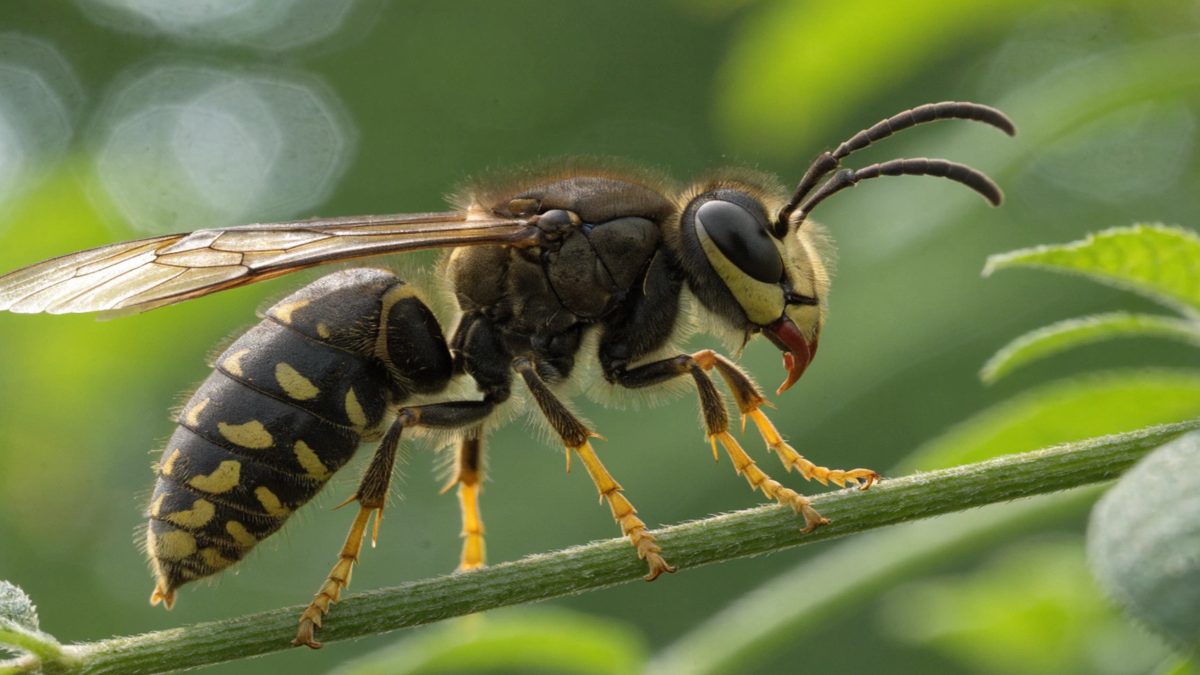
Asian hornet in France and Belgium: identify, report, act
The Asian hornet is now established everywhere in France and Belgium. How to identify it, report it to authorities, and have a nest safely destroyed.
Asian hornet in France and Belgium: 2026 guide
The Asian hornet (Vespa velutina) is now present in every French department and has colonised the whole of Belgium since 2017. It is a priority invasive species, listed as a pest under European regulation. Nest destruction costs between €150 and €250 with a properly equipped professional.
How to recognise it
| Feature | Asian hornet | European hornet |
|---|---|---|
| Size | 2-3 cm (queen 3-3.5 cm) | 2.5-3.5 cm (queen up to 4 cm) |
| Thorax colour | Black | Reddish-brown |
| Abdomen | Dark with a single yellow-orange segment | Reddish-brown with yellow stripes |
| Legs | Yellow tips | Reddish-brown |
| Flight | Hovering in front of beehives | More erratic |
| Active at night | No | Yes |
Why it's urgent
- Threat to honeybees: a single nest can destroy 30 hives within a 3 km radius
- Pollination impact: local collapse of biodiversity
- Health risk: painful stings, dangerous for allergic people
- Exponential growth: one autumn queen = 2,000-3,000 individuals the following summer
What to do if you find a nest
1. Don't approach
Keep a safety perimeter of at least 5 metres. No noise, no sudden moves, no mowing under the nest.
2. Report it to the authorities
In France: report on frelonasiatique.mnhn.fr (National Museum of Natural History) and to your town hall. Some municipalities cover part of the destruction cost.
In Belgium: report on vespawatch.be. In Wallonia, destruction by an accredited professional is free for private individuals through the CARI non-profit (Belgian beekeeping research centre).
3. Have it destroyed by a professional
Never as an amateur intervention — risk of multiple stings (Asian hornets attack in groups over a 5-10 metre range). A professional kitted out with a reinforced suit and a telescopic pole intervenes in 1-2 hours.
Indicative nest destruction prices
| Configuration | Indicative price | Duration |
|---|---|---|
| Primary nest (spring, ≤ 30 cm) | €80 – €130 | 24-48h |
| Low secondary nest (≤ 5 m) | €130 – €180 | 24h |
| High secondary nest (5-15 m) | €180 – €250 | 24-48h |
| Very high nest (> 15 m, pneumatic pole) | €250 – €400 | 48-72h |
| Municipal subsidy (variable) | -50 % to -100 % | depending on town hall |
When to look for a nest
| Season | Nest appearance | Strategy |
|---|---|---|
| March-May | Primary nest (tennis-ball size), often under shelter (shed, roof, nest box) | The ideal moment: small nest, few individuals, easy intervention |
| June-August | Secondary nest at height (up to 80 cm), often in trees | Urgent intervention if close to dwellings |
| September-November | Maximum nest, up to 3,000 individuals + founding queens | Destroy before the new queens leave to found new nests |
| December-February | Abandoned nest (the new queens hibernate elsewhere) | No urgency, but worth removing to avoid confusion |
Found an Asian hornet?
Pest Run is opening soon in your area, with professionals equipped for Asian hornets (reinforced suits + telescopic poles). Join the waitlist to be notified as soon as we open near you.