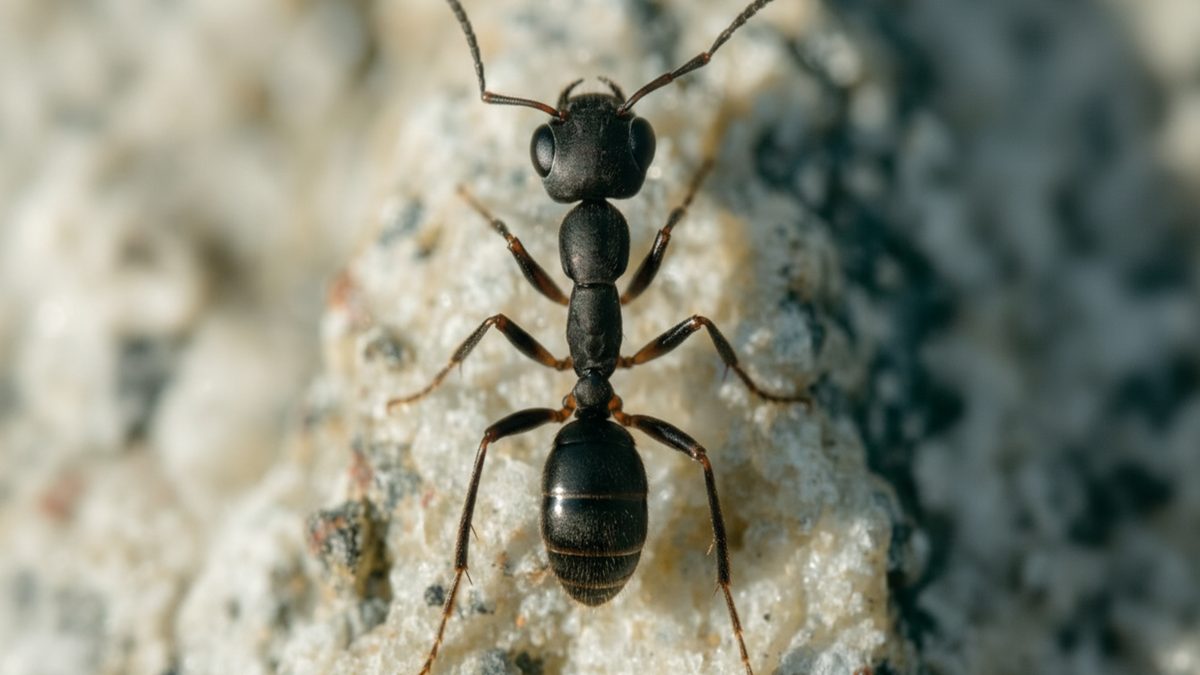
Spring ant invasion: act now before it's too late
Colonies wake up at the first warmth. Why to act before May, how to spot early signs, and how much professional treatment costs.
Spring ants: why to act before it's too late
As soon as the temperature climbs above 15 °C for several days in a row, ant colonies come out of hibernation and start scouting. In France and Belgium, this trigger usually happens between late March and early May. Acting in this window costs less and avoids a full summer infestation.
Why spring is the critical window
During winter, colonies live at a slow pace, huddled in underground nests or inside walls. In spring:
- The workers head out foraging again and lay pheromone trails
- The queen resumes laying — the colony can triple in size in 2 months
- The winged ants (males and future queens) leave to mate — that's the nuptial flight, often in May-June
- A newly fertilised queen can start a nest in a crack in your house
Acting before the nuptial flight means treating a single colony. Acting after means treating several.
The 5 signs of an early invasion
- One or two isolated ants in the kitchen — they are scouts, not coincidences
- Visible trails along the skirting boards, the worktop, or around a fallen crumb
- Small piles of sawdust or sand near a crack (sign of carpenter ants)
- Scratching noise inside a wooden partition at night
- Winged ants near a window — the colony is already mature and reproducing
If you see more than 5 ants a day in the same room, the nest is probably less than 10 metres away.
Common species in France and Belgium
| Species | Notable trait | Risk |
|---|---|---|
| Black garden ant (Lasius niger) | The most common, attracted to sugar | Nuisance, no structural damage |
| Pharaoh ant (Monomorium pharaonis) | Tiny (2 mm), pale beige, lives indoors | Health vector, hard to eradicate |
| Carpenter ant (Camponotus) | Large (8-15 mm), tunnels into damp wood | Structural damage — like termites |
| Argentine ant (Linepithema humile) | Invasive species, super-colonies | High density, displaces local species |
Species identification drives the treatment — a carpenter ant is not treated like a garden ant.
Why home remedies fail (most of the time)
- Vinegar, lemon, coffee grounds: clear a trail for a few hours; the colony lays another
- Insecticide bombs: kill the visible workers and alert the queen, who relocates the nest elsewhere
- Off-the-shelf sweet-bait traps: useful for a small garden-ant invasion, ineffective on pharaoh ants (colony budding)
- Sealing the cracks: useful as prevention, useless once the colony is installed
The professional 3-step protocol
Step 1 — Identification
The pro identifies the species (critical: pharaoh ≠ garden ≠ carpenter) and locates the main trails to track back to the nest.
Step 2 — Delayed-action bait treatment
Gel or granular bait placed on the trails. Workers carry the bait back to the nest and contaminate the queen and the brood. Visible effect in 7 to 14 days, full elimination of the colony in 3 to 4 weeks.
For carpenter ants: injection treatment into the wood galleries.
Step 3 — Follow-up visit
Check 3 to 4 weeks later to confirm eradication and treat any satellite colonies.
Indicative price table
| Configuration | Indicative price | Duration |
|---|---|---|
| Apartment / studio | €90 – €150 | 1 visit + follow-up |
| House < 100 m² | €130 – €200 | 1 visit + follow-up |
| House + garden (outdoor nest) | €180 – €280 | 1 to 2 visits |
| Carpenter ants (wood treatment) | €250 – €450 | 1 to 2 visits |
| Follow-up visit | €0 | 3-4 weeks after |
Acting in March-April costs 30 to 50 % less than an urgent intervention in July — the colony is smaller and the treatment quicker.
The 4 prevention steps to do right now
- Seal the cracks around windows, skirting boards and pipe entries (silicone or filler)
- Store sweet food (honey, syrup, sugar, cakes) in airtight containers
- Empty the bins daily and clean the bin itself (sugar = bait number one)
- Inspect damp wood near windows and the roof — entry point for carpenter ants
Seeing the first scouts?
Don't wait until the trail is visible 24/7. Pest Run is opening soon in your area. Join the waitlist to be notified as soon as a certified professional intervenes near you, before the summer peak.